
Hazelwick School
Our Shared Vision:
For each and every student to achieve their maximum potential.



Welcome to Hazelwick School
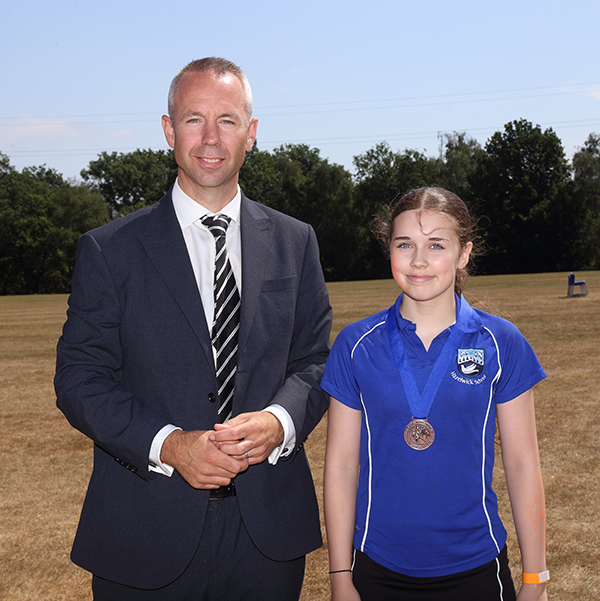
I am delighted to welcome you to Hazelwick School and to our website. Hazelwick is a wonderful school, focussed on offering a top-level education to all our students and supporting them to become the very best version of themselves.
Latest News
- Read MoreFriday, 23 Oct 2026
Headteacher's Message for October
Please see my video message below, which gives a brief review of the month and some highlights for our Hazelwick students.
I am very pleased to be sending you the link to our online Newsletter. It details a lot of events and successes in school this month, as well as sharing key dates, key safeguarding information and local links.
The link for the October Newsletter is here: Hazelwick School Newsletter - October 2026
With kind regards
Mr D Leadbitter
Headteacher
- Read MoreThursday, 10 Sep 2026
Headteacher's Message for September
Please see below a link to my video message for September.
We have had an excellent start to the school year. It has been fantastic to welcome our students back. Our new staff have fitted in brilliantly and the first term is going very positively. More information and examples are in the video below.
I am very pleased to be sending you the link to our online Newsletter. It details a lot of events and successes in school this month, as well as sharing key dates, key safeguarding information and local links.
The link for the September Newsletter is here: Hazelwick School Newsletter - September 2026
With kind regards
Mr D Leadbitter
Headteacher
- Read MoreTuesday, 21 Jul 2026
Headteacher's Message for July
What a wonderful year it has been. There have been so many successes, both great and small, and moments where the lightbulb had pinged on as students have got that key understanding. We have seen our students grow in front of our eyes, managing feats they didn’t think they were capable of, and managing to achieve academic progress across their subjects that sets them up brilliantly for the next steps, whether that is the next year at Hazelwick, external exams next year or moving on to university, apprenticeships or employment.
- Read MoreTuesday, 30 Jun 2026
Headteacher's Message for June
I would like to start by congratulating our Year 11 and Year 13 students on their hard work, resilience and commitment that saw them through the GCSE and A level exam period. They applied themselves very well, and it was a great privilege to be at the Year 11 Prom and the Year 13 Leavers’ Ball and see them celebrating it style.
- Read MoreFriday, 22 May 2026
Headteacher's Message for May
Please see my May Newsletter video message, which gives a brief review of the month and some highlights for our Hazelwick students.
I am very pleased to be sending you the link to our online Newsletter. It details a lot of events and successes in school this month, as well as sharing key dates, key safeguarding information and local links. The link for the May Newsletter is here: Hazelwick School Newsletter - May 2026
This month’s Newsletter, as ever, gives an excellent flavour of the range of opportunities and experiences that students have had at Hazelwick. From the Year 8 Translation Spelling Bee to Engineering Tomorrow Bridges challenge, from the 100 Year 10 students visiting the Golden Hinde and the Clink prison in London to the visit to Sussex County Cricket Club in Hove for the some of our hearing-impaired students, from wonderful lessons that we get to visit on a weekly basis right across the school to the Sussex Sportshall Athletics finals that our students enjoyed participating in.
Our primary focus rightly remains on the quality of education delivered through the lesson on our students’ timetables. It is great to see our students engage, be challenged and thrive under the expert guidance of their teachers. However, we also recognise the benefit and impact of the activities outside of lessons and the range of opportunities that have taken place in May offer an excellent insight into the learning beyond the classroom that students have access to.
We hope that all our students have a positive and enjoyable half term break and we will look forward to seeing them all again on Monday 1st June.
With kind regards,
Mr Leadbitter
Headteacher - Read MoreThursday, 30 Apr 2026
Headteacher's Message for April
The return from the Easter break always brings with it renewed focus. The knowledge that exams are within sight for Years 11, 12 and 13 ensure that the focus goes up another few gears, and that emphasis can be felt right across the school. The summer term is a long term, with 13 and a half weeks this year. We will look forward to our Sports Day, Awards Evenings, Congratulations Trips, extra-curricular visits both locally and internationally and the school show. However, that all falls in the final half term. Before then we will be ensuring that the standards remain high, the wonderful opportunities that our students are offered continue and that each individual continues on their journey to become the very best version of themselves that they can be.
Stay upto date with our
Forthcoming Events
- 26 OctHalf TermAll Day
- General Event
- 06 NovReports (Y13)8:30am – 3:00pm
- General Event
- 06 NovBusiness Trip (Y12)9:00am – 12:25pm
- General Event
- 07 NovLaw Trip (Y12 - 13)7:30am – 5:00pm
- General Event
- 11 NovArt Trip (Y8)8:50am – 3:00pm
- General Event
- 13 NovFlu Vaccinations (Y7 - 11)All Day
- General Event
- 18 NovDofE Introductory Evening [Virtual] (Y9)4:30pm – 7:30pm
- General Event
- 19 NovMusic Winter Showcase6:30pm
- General Event
- 20 NovReports (Y8)8:30am – 3:00pm
- General Event
- 26 NovParents'/Carers' Evening (Y13)4:30pm – 7:30pm
- General Event
- 27 NovReports (Y9)8:30am – 3:00pm
- General Event
- 30 NovInset DayAll Day
- General Event
- 01 DecMock Exams (Y11)8:30am – 3:00pm
- General Event
- 04 DecReports (Y12)8:30am – 3:00pm
- General Event
- 04 DecStudent Review Day (Y7)8:30am – 3:00pm
- General Event
- 11 DecFestive Friday (Y12 & 13)8:30am – 3:00pm
- General Event
Stay upto date with our
House Points

Lovelace
14796
Points

Parr
13288
Points

Faraday
11057
Points

Moody
10594
Points

Sancho
9767
Points

Inayat Khan
7472
Points